Lounge Sound System Design: Engineering Mood in Modern Lounges
What Makes a Professional Lounge Sound System?
How professional audio, acoustic control and multi-zone sound design create balanced, immersive experiences across modern lounges, bars and hospitality venues.
Bars and lounges remain among the most globally adaptable hospitality formats, with their visual language and operational character shaped by geography, demographic profile, and target age group. For venues designed around a younger audience, experience design becomes a primary differentiator. These environments are not simply places to drink; they are carefully staged social ecosystems, where architecture, lighting, and sound — often delivered through meticulously specified Pro Audio Loudspeakers and a calibrated pro audio sound system — operate together to choreograph mood, movement, and memory.
Why Sound Matters in Lounge Design
The guest experience is established before a single drink is poured, beginning at the threshold. The entrance must function as a visual magnet — a layered, dynamic composition of warm light and material texture that draws arriving guests inward. Warm, dimmed lighting schemes, paired with high Colour Rendering Index spot illumination, reveal the grain of reclaimed wood, the depth of metal finishes, and the tactile richness of stone surfaces. These material cues signal exclusivity and intent. Partial visual access — through fluted glass, curated foyers, or screened sightlines — introduces a sense of discovery, allowing guests to glimpse the atmosphere within without fully revealing it. The message is subtle but deliberate: an invitation to enter and explore.
Service design is as integral to this threshold as architecture. The first human interaction must mirror the spatial language — polished, anticipatory, and genuine. Rather than theatrical displays of authority, the greeting should prioritise warmth and recognition. Authentic eye contact, a personalised welcome where possible, and a brief gesture of guidance — “let me find the perfect spot” — reframes the visitor as a guest, not a transaction. This moment establishes emotional tone before any technical system comes into play.
Designing Audio for Different Lounge Zones
Sound becomes the next layer of transition. At the entry, audio acts as a psychological buffer, easing guests out of the noise of the street and into a more controlled sensory environment. The sound here should be soft, smooth, and atmospheric — a sonic scent rather than a statement. Discreet ceiling speakers, often part of an integrated Ceiling Speaker System with Amplifier configuration, provide this subtle diffusion without drawing visual attention. Sound Pressure Levels should remain within 60–70 dB at the entrance, with tonal emphasis on mid-high frequencies to preserve clarity and airiness, while low frequencies are deliberately rolled off. Given the prevalence of reflective surfaces in entry zones, targeted acoustic absorption is essential to prevent clatter, control reverberation, and avoid amplification of both ambient noise and human voices.
As guests progress into the primary Bar and lounge zones, the acoustic environment evolves to support social intimacy. These areas — distinct from the main dance floor — represent one of the most technically demanding sound environments. Here, music must retain energy and presence while allowing for conversation, drink ordering, and social interaction. SPL levels should typically sit between 80–90 dB, delivered through a distributed Professional Speaker System using carefully voiced professional loudspeakers with adequate headroom. Precise imaging, achieved through time-aligned, high-fidelity loudspeaker arrays and supported by a correctly matched power amplifier professional configuration, ensures low distortion and tonal consistency
Lounge Speaker Placement & Coverage
Cost-driven compromises — such as underspecified filler cabinets — often undermine this balance. Small, low-capacity loudspeakers struggle to keep pace with the main system, introducing distortion and disrupting tonal coherence. A successful lounge system relies on uniform loudspeaker voicing, consistent high-frequency character, and ample headroom across all zones, ensuring a seamless acoustic signature. In some layouts, compact Line Array Speaker System deployments may be introduced to maintain vertical coverage control while preserving aesthetic discretion. System tuning must also account for Speech Intelligibility and smoothing frequencies that interfere with dialogue to preserve conversational comfort. Without proper reverberation control, the cocktail party effect quickly dominates, forcing raised voices and accelerating listener fatigue — a dynamic that shortens dwell time and weakens the overall experience.
Subwoofers and Low-Frequency Control
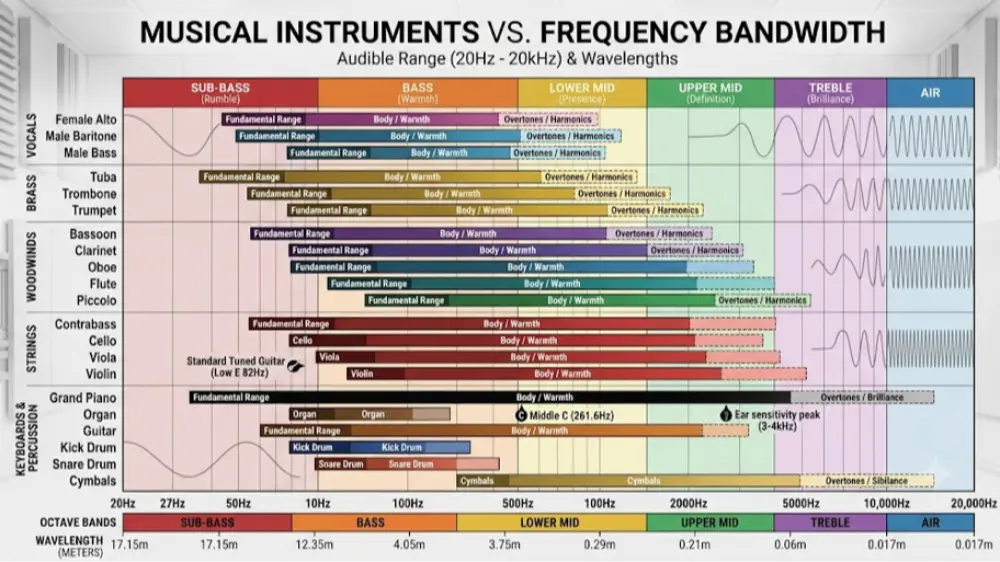
For venues incorporating dedicated dance floors, the climax of the spatial and sensory journey unfolds at the performance core. Here, sound becomes physical. SPL levels rise to 100–110 dB, and the tonal balance shifts to deliver powerful low-frequency energy in the 45–150 Hz range, paired with crisp, articulate high frequencies that preserve vocal and instrumental detail. This environment demands high-output Professional DJ speakers integrated within a fully engineered professional sound speaker architecture. Acoustic diffusion, subwoofer alignment, and amplifier headroom must be precisely calculated to eliminate dead zones and suppress harsh flutter echoes from untreated surfaces. Low-frequency control is critical; acoustic treatment must keep bass tight and defined rather than boomy, ensuring that the performance feels immersive and electric rather than merely loud.
Choosing Loudspeakers for a Lounge
The final chapters of the guest journey — often overlooked — play a critical role in sustaining experiential continuity. Washrooms should operate as sensory reset spaces, maintaining musical continuity at reduced levels. Here, SPL should sit between 60–65 dB, with aggressive low-frequency filtering to prevent structural vibration through walls and plumbing. Compact distributed systems — similar in philosophy to scaled Gym Audio Systems — maintain consistency without overwhelming the space.
Smoking areas and outdoor patios function as decompression zones. SPL levels should remain moderate, typically 70–75 dB, with an airy, ambient tonal character. Given their exposure to open air and potential sound leakage, directional professional loudspeakers are essential to contain energy within the guest zone while respecting surrounding environments and local noise regulations.
Across all peripheral spaces, technical intent must match that of the main performance areas. These zones are not afterthoughts; they are extensions of the narrative. When acoustics, lighting, and spatial choreography are treated holistically — supported by a fully integrated Pro Audio Sound System — the venue delivers a seamless, Professionally Engineered Experience, from the first visual cue at the entrance to the final note of the night.
Frequently Asked Questions About Lounge Sound Systems
What is a lounge sound system?
A professional audio setup designed to deliver balanced, immersive music while maintaining comfortable conversation levels.
How do you design a sound system for a lounge?
Consider the lounge size, acoustics, seating layout, required SPL, speaker placement, subwoofers, DSP and zoning.
What speakers are best for a lounge?
Professional loudspeakers that provide clear, balanced coverage and suit the lounge's size and acoustic environment.
How many speakers does a lounge need?
It depends on room size, ceiling height, speaker coverage and required sound levels. Proper distribution is more important than quantity.
Should a lounge use ceiling speakers or wall-mounted speakers?
Ceiling speakers work well for distributed background music, while wall-mounted speakers suit higher-output applications.
Do lounges need subwoofers?
Not always, but subwoofers add depth and controlled low-frequency performance for music-focused lounges.
How can a lounge sound system support conversation?
Even sound distribution and controlled volume reduce loud spots and help guests communicate comfortably.
How do you control sound between different lounge zones?
DSP and multi-zone audio systems allow independent volume, source and EQ control for different areas.
What role does DSP play in a lounge audio system?
DSP manages EQ, crossover, delay, limiting and system tuning for consistent audio performance.
How can acoustic treatment improve a lounge sound system?
It reduces unwanted reflections and reverberation, improving music clarity and speech intelligibility.
Are line arrays suitable for lounges?
They can be effective in larger, high-output lounges, while compact systems may suit smaller spaces better.
How can low-frequency sound leakage be controlled?
Proper subwoofer placement, DSP tuning, acoustic isolation and directional bass techniques can help control low-frequency leakage.