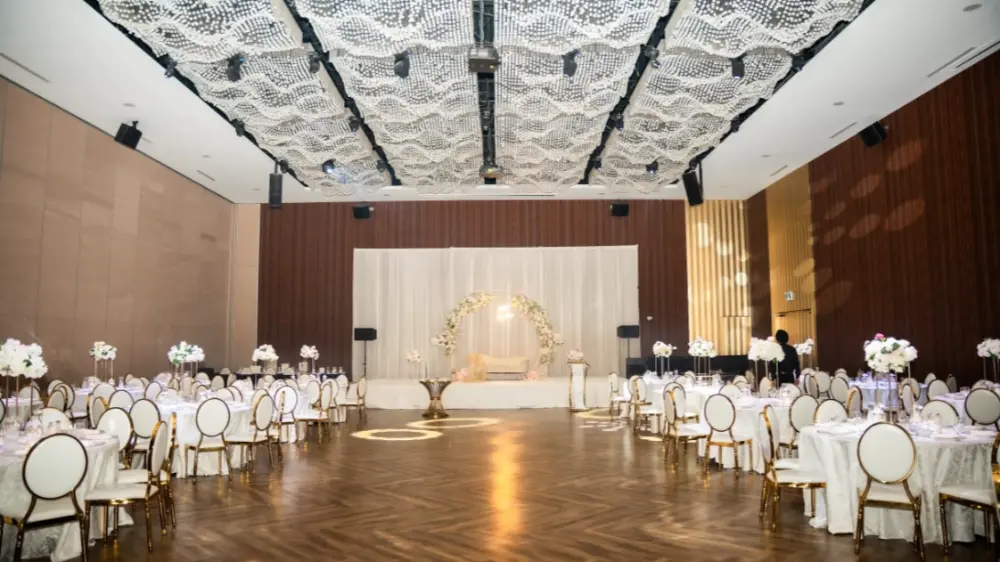
AUDITORIUMS: Where Audire Must Matter More Than Torium
Professional acoustic and audio design for clear speech, even sound coverage, controlled directivity and immersive auditorium experiences
The word auditorium comes from the Latin verb audire, meaning to hear, and torium, meaning a place where something happens. Ironically, in many modern projects, millions are spent perfecting the torium — architecture, finishes, façade — while the audire, the very reason the space exists, is treated as secondary.
A hallmark of a world-class auditorium is its ability to deliver a true-to-life experience. Beyond architecture, a great space integrates seamless services: climate control with ultra-low NC (Noise Criteria) ratings, ergonomically comfortable seating with technically competent line-of-sight, and adaptive lighting that transitions dramatically between successive acts. These are the backbone of a great auditorium.
However, the true emotional impact lies in the synergy between the physical structure and the electro-acoustic experience. Every seat — from the front row to the balcony — must feel like the best seat in the house.
To achieve this, a team of space planners, electro-acoustic consultants, pro audio system designers, and interior designers must collaborate to create a technically sound and commercially viable project.
The Acoustic Reality of Auditoriums
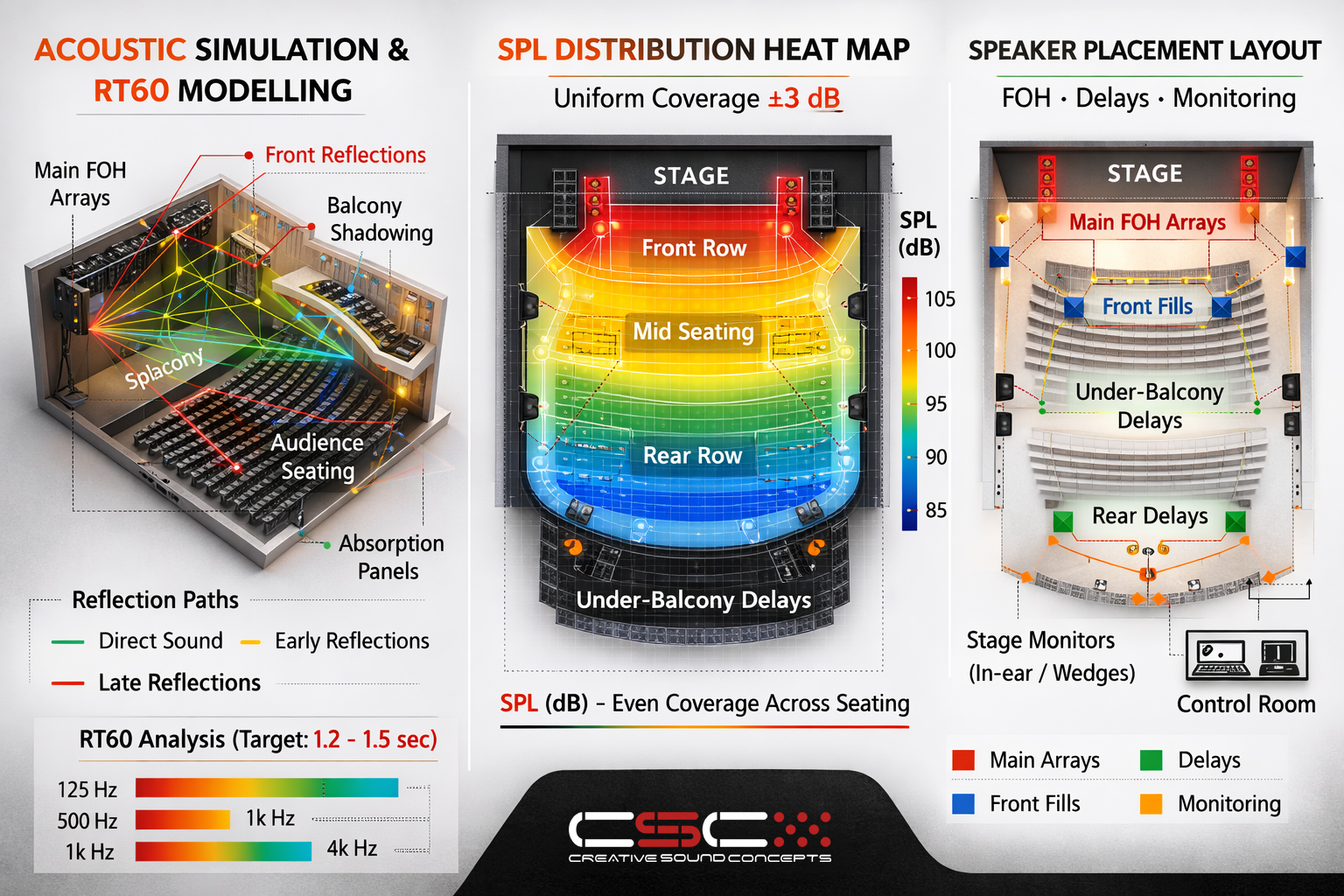
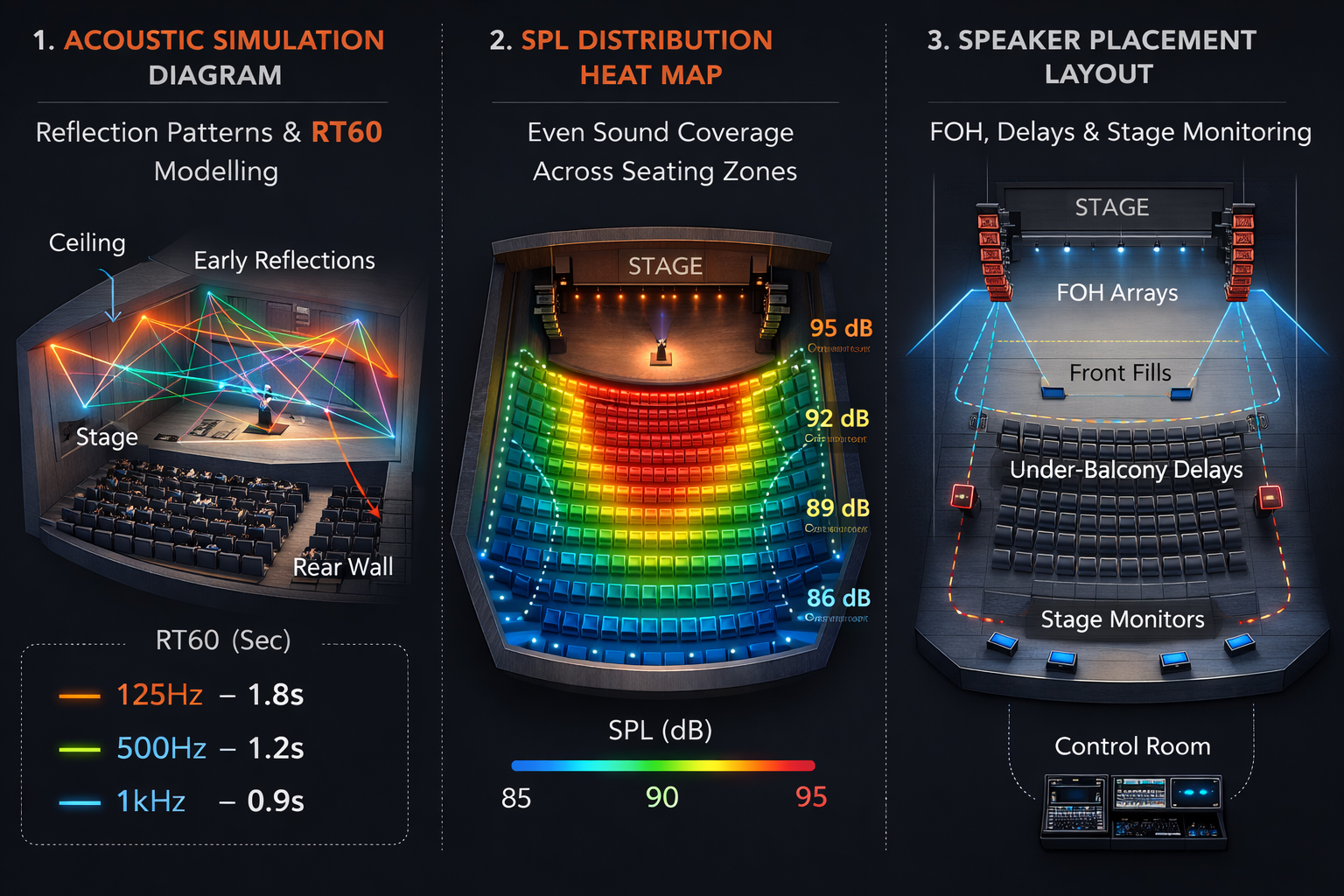
Auditoriums are often plagued by RT60 (Reverberation Time) challenges. RT60 measures the average time it takes for a signal to decay by 60 dB. When excessive, sound reflections from hard surfaces blur speech and reduce intelligibility.
Balcony shadowing — where overhanging structures block direct sound from the main speakers — creates additional complications. Reflected sound reaching the audience before direct sound results in a muddy echo effect that disengages listeners.
This is where Professional Auditorium Sound System Design becomes critical.
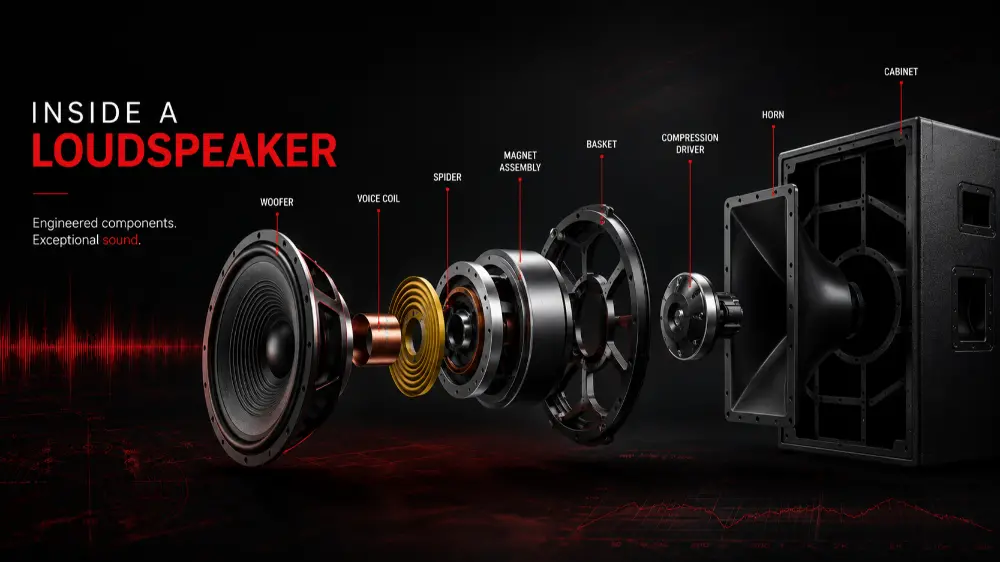
The Choice of Speakers Defines the Outcome
The Choice of Speakers is not cosmetic — it is structural. For smaller, intimate halls, high-quality point source loudspeakers work beautifully, offering clear directional sound with controlled dispersion.
For medium to large auditoriums, Line Array Systems or horn-loaded point source arrays are often the first choice of consultants. These systems project sound further with predictable vertical coverage control, ensuring even SPL distribution from the front row to the back.
Under-balcony zones and rear seating areas require carefully designed distributed systems with time-aligned delay speakers. Without properly tuned delays, the back rows experience a diluted version of the performance.
Green rooms, control rooms, and backstage areas also require dedicated sound reinforcement systems, often overlooked in early planning stages.
In professional projects, CSC Audio Auditorium Solutions focus on predictable coverage modelling, controlled directivity, and optimised gain-before-feedback — ensuring clarity and impact across every seat.
Before the First Brick: Simulation and Modelling
Before construction begins, physical dimensions must be analysed to avoid room modes — low-frequency resonances caused by structural proportions. Interior materials and seating layouts must be simulated using acoustic modelling software. Key metrics include:
• RT60 – Measures decay time
• STI (Speech Transmission Index) – Measures speech intelligibility
However, RT60 and STI are quantitative baselines. They do not always reveal slap-back echoes or tonal imbalance.
This is where auralization becomes essential. Using binaural modelling, engineers can actually listen to the auditorium before it is built. Auralization allows designers to hear tonal artefacts, early reflections, and flutter echoes during the design phase — enabling corrective adjustments before construction. This is modern pro audio engineering, not guesswork.
The Core Objective: Even SPL and Vocal Intelligibility
The primary goal of any auditorium sound system is demanding:
• High vocal intelligibility
• Even Sound Pressure Level (SPL) distribution
• Natural tonal balance
• High gain-before-feedback
Audiences in the back row should not strain to catch every third word while reflected sound dissolves speech into mud. Front-row listeners should not suffer from excessive SPL, while rear seats lose emotional nuance.
Sound must feel immediate — on your face — not distant or detached. A properly engineered professional pro audio system ensures that the last seat experiences the same clarity and impact as the first.
Imaging: Keeping the Sound Anchored to the Stage
Imaging must remain centered to the stage. If speakers are poorly positioned along walls or ceilings without aligned front fills, the audience perceives dialogue coming from hardware — not the performer.
Perfect imaging is achieved through:
• Accurate loudspeaker placement
• Time-aligned delay systems
• Properly tuned front fills
• Precise DSP configuration
When correctly aligned, the audience hears the voice from the actor on stage — not from a box on the wall. This psychological alignment is essential for immersion.
It Starts at the Source: Microphones and Signal Integrity
Great sound begins at the source — the right microphone.
• Gooseneck microphones for podium stability
• Lavalier and headband microphones for mobility
• Handheld microphones for live engagement
Even the best microphones require careful calibration.
Using measurement microphones, engineers analyse the room to set EQ curves, delay timing, and feedback suppression parameters. Advanced digital signal processing helps eliminate rogue frequencies that cause early feedback. Professional Pro Audio system integration is as much about control as it is about power.
Supporting the Performer
A professional auditorium sound system must also support performers. Stage monitoring — via floor wedges, in-ear monitors, or side fills — allows performers and conductors to hear themselves without compromising the Front of House (FOH) mix.
In the digital era, the system must also provide:
• Dedicated broadcast feeds
• Clean recording outputs
• Streaming-optimised mixes
Remote audiences should never hear room echo or uncontrolled reflections.
When Audire Truly Matters
An auditorium is not simply a building. It is a space engineered for emotion. Architecture may attract the eye, but Pro Audio design defines the experience. The right choice of speakers, predictive acoustic modelling, controlled dispersion, and expertly tuned systems ensure that audire — the act of hearing — is honoured.
When acoustics, Loudspeaker engineering, and spatial design work in harmony, the result is transformational. That is the difference between a hall that looks impressive and one that sounds unforgettable. And that is where precision-engineered solutions, such as those from CSC Audio, play a decisive role in shaping modern auditoriums.