How Restaurant Sound Systems Influence Guest Experience
How professional restaurant audio influences ambience, conversation, comfort and the overall dining experience
The right audio sound system doesn’t just fill silence—it elevates the guest’s mood, how long they stay, and how much they spend. Several studies have shown that sales and customer numbers increase in a space that has a rich sound system that allows people to have a conversation without asking the waiter to turn down the volume.
Without a customer even realising it, a nice warm sound system, correct temperature, fragrance, ambient lighting, and a smiling staff play a great role in how a customer reacts and feels about a restaurant when they walk into the space. If all the above are in place, it elevates the mood and the time they spend enjoying the evening.
Why Audio Matters in Restaurant Design?
-
Cuts road noise.
-
Gives the space a soul.
-
Keeps your conversation private from eavesdroppers.
-
Engages your mind without you even knowing it.
-
Reduces the clatter of cutlery.
-
Cuts human noise.
-
Keeps someone coming alone entertained.
How Background Music Influences Restaurant Atmosphere
Volume is equally critical. Studies show that moderate, well-balanced audio with extended low-frequency response creates a perception of premium quality. A room that's too quiet makes guests feel exposed, conversations feel public, and people eat faster and leave sooner. In a restaurant, guests come to catch up and relax. Loud music impedes conversation, triggers stress hormones, shortens visits, and drives negative reviews. The sweet spot is achieved through careful acoustic design with an evenly distributed system and an adequate density of speakers based on room size, ceiling height, furniture, and typical guest density. Uneven sound distribution with consumer-grade speakers creates hotspots and dead zones, overwhelming guests near the speaker while others strain to hear.
How Background Music Influences Restaurant Atmosphere
Walk into any high-performing Restaurant, and you'll notice something immediately: the sound feels right. It's not too loud, nor is it a sterile silence. The music matches the mood, the voices blend naturally, and you instinctively relax. That's no accident. It's the result of a well-designed, high-quality Professional Sound System—one of the most underrated investments in modern hospitality.
Keeping customers and designers in mind, Creative Sound Concepts has crafted most of its products with size, power, and looks in mind. They have a simple, neutral form without a strong personality. This does not overpower the good work done by interior designers and architects, who choose products that perform well and are not noticed once installed.
Decades of consumer psychology research confirm that sound is one of the primary drivers of mood, behaviour, and purchasing decisions. In a restaurant context, this translates directly to table turnover rates, average spend and repeat visits. Evenly distributed background music has a measurable effect on the pace at which guests eat and drink. A rich and lower BPM track encourages guests to linger, order another bottle of wine, and return for dessert—increasing revenue per cover.
Guests rarely notice good audio—but they always feel it. A well-tuned system creates an invisible architecture of comfort that makes the restaurant a place people want to return to.
Why Even Sound Distribution Matters
Common aspects overlooked while choosing a sound system:
-
Using far too few speakers, causing pockets of low and high SPLs.
-
Using a very small sound system that needs to be driven hard.
-
Using very little soft material as part of the interiors results in echo and clutter.
-
Using consumer-grade Bluetooth speakers or basic PA systems randomly installed by electricians.
-
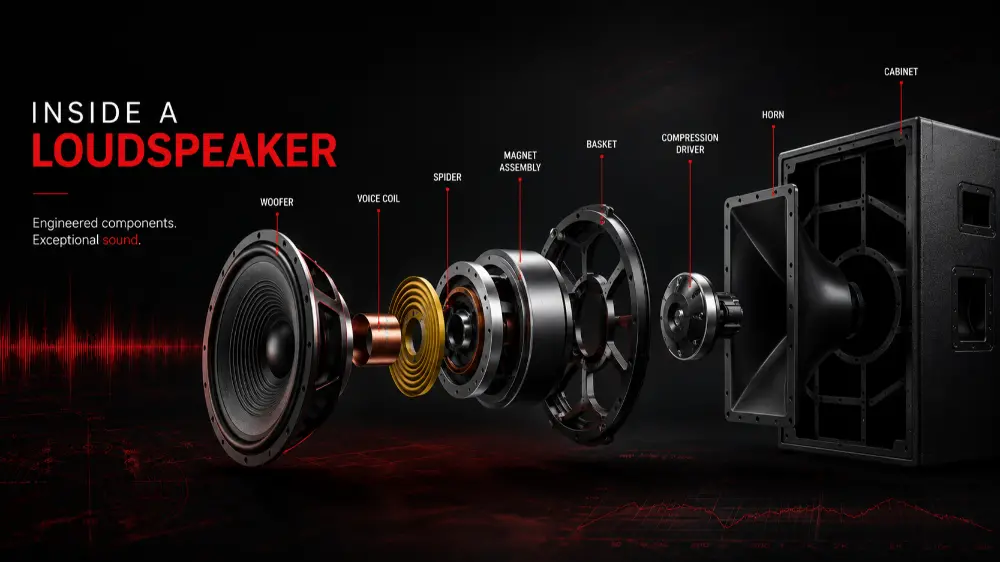
Using cheap, off-the-shelf speakers that have low-quality HF units and sound sharp and distorted even at mid-volumes.
These certainly save on the initial investment, but in the long run, they dent the venue both financially and reputationally. A purpose-built pro audio system solves all of these problems from the ground up. The investment pays back through improved guest satisfaction, higher average transaction values, and a brand reputation that word-of-mouth can amplify.
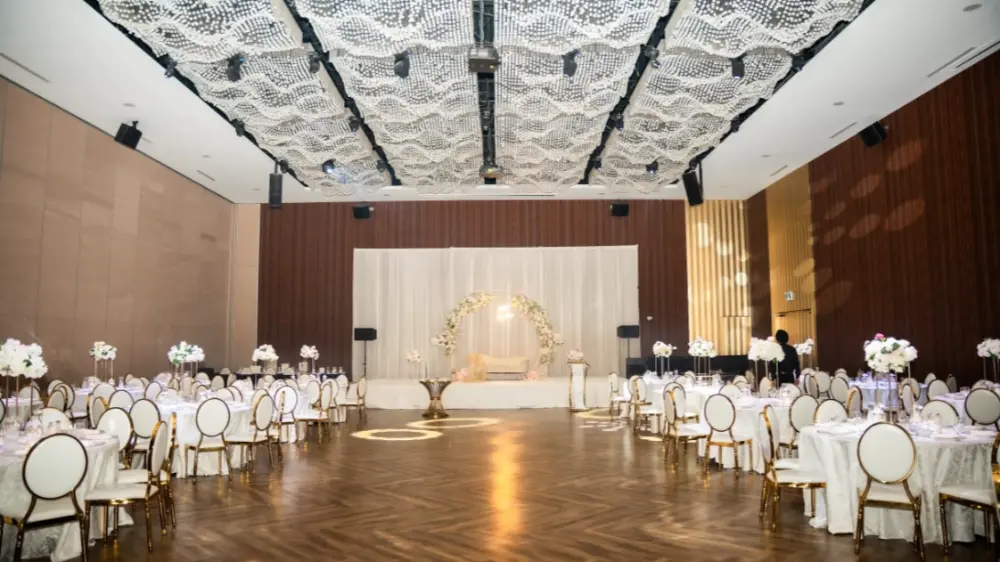
No two restaurants are acoustically identical; hence, they cannot have a standard bundled audio system. Each venue needs to be designed keeping the dimensions in mind to ensure even coverage, resulting in even SPL. The background music system for a 30-cover fine diner differs enormously from what's needed in a 200-seat casual dining venue with a live kitchen or a cocktail bar. Key variables that determine system specification include room dimensions, ceiling height and surface materials (hard floors, exposed brick, and glass) that reflect sound differently than carpeted or soft-furnished spaces.
Restaurant Sound Systems for Different Venue Types
Several restaurants entertain their customers with a singer or a performer. They may have a dedicated stage, or the performer may casually walk through the guests. The sound system design is different from a space that just plays pre-recorded content. In such a case, imaging needs to be taken care of. This means one should always feel the sound is emanating from the stage, preferably via a sub-sat system. The importance, again, is the volume of the system. It should be just loud enough for a customer to look at the performance or sit down and chat. Designing such a sound system needs an understanding of the customer profile and the correct choice of loudspeakers. For some large-format restaurants, the most commercially powerful features are private dining areas. These areas are specifically booked and need complete control over the loudness and type of music. Here, a multi-zone system becomes the choice for the space. This allows operators to deliver completely independent audio environments across different areas—all managed from a single app or control panel.
How Many Speakers Does a Restaurant Need?
Some branded restaurants have compartmentalised spaces where the brand chooses to play its own proprietary music. Imagine you enter a waiting area that plays upbeat, brand-aligned music that sets the tone and gives the restaurant its brand identity. The main dining room transitions to a warmer, mid-tempo soundtrack that encourages a relaxed, extended visit. The bar has a bit more energy, encouraging a customer to sit and have an extra drink. The private dining room, where a corporate event is underway, plays nothing at all—or streams a custom playlist agreed upon in advance with the client. This is now accessible to independent restaurants through affordable multi-zone sound systems designed specifically for hospitality.
Today's leading restaurants treat audio as part of a connected AV ecosystem rather than a standalone installation. A fully integrated restaurant AV system might combine background music with screen-based content for sports or promotional displays, voice announcement capabilities for floor staff, outdoor terrace audio, and CCTV audio integration for security purposes.
Recommended SPL’s for restaurants.
-
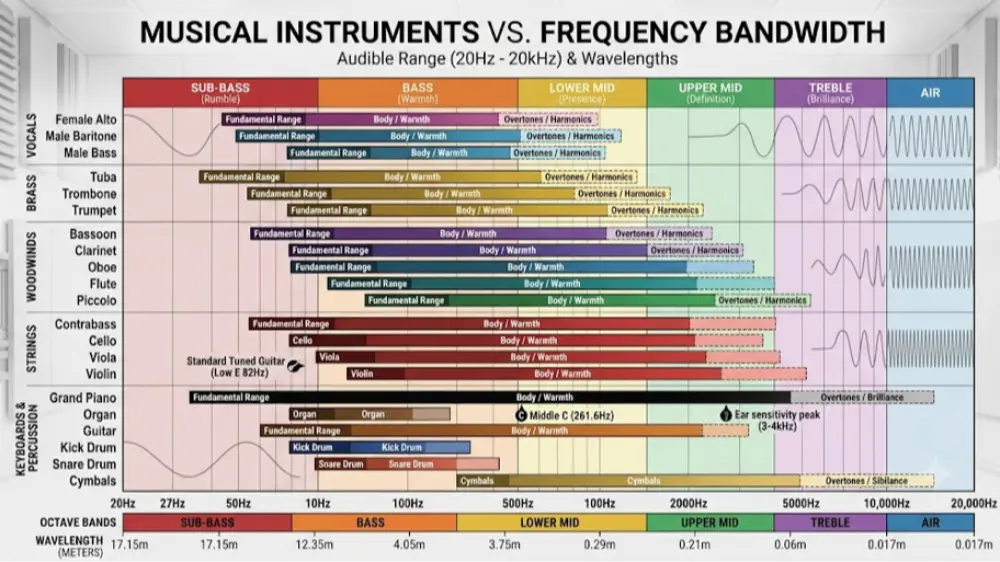
Background music in a restaurant: 65 to 70 or 5 DB higher than ambient noise with a frequency response of 75 Hz to 15KHz
-
A restaurant with a performer on the stage: 80 to 90 undistorted sounds with a calmed-down HF section and rich low-frequency extension. SPL’s depend on the mood and time of the day.
-
A restaurant with a bar: 75 to 85 dB undistorted sounds with extended low frequency.
Restaurant Sound Systems for Different Venue Types
Sound is the most powerful tool in your hospitality toolkit that most operators aren't fully using. Whether you're planning a new fit-out, refreshing an existing venue, or are simply frustrated that your current setup does not match the ambition of your food and service, Creative Sound Concepts has a product in every size, shape, and power level that can fit into your space and even be built into your furniture. Our team of specialists is just an email away. Forward us your drawings, and someone will get in touch with you to assess your pain points, understand your brand, and recommend the right solution—at the right investment level.
Some research papers that could give you insight into audio and customer behaviour:
-
Paper: The Influence of Background Music on the Behaviour of Restaurant Patrons
-
Author: k E. Milliman (1986)
-
Paper: The Influence of In-Store Music on Consumer Monitoring
-
Authors: North, A. C., & Hargreaves, D. J. (1998)
-
Author: Dipayan Biswas et al. (2019)
-
Paper: Auditory Contributions to Food Perception and Consumer Behaviour
-
Author: Charles Spence (2019/2025)
-
Paper: Acoustic Appetite: How Restaurant Soundscapes Shape Dining Experiences
-
Authors: B. Borah & M. Kumar Sarma (2024/2026)
info@csc-audio.com | www.csc-audio.com | Consultation available nationwide