Nightclub Sound System Design: How Sound, Space & Psychology Shape Club Culture
What Makes a Professional Nightclub Sound System?
A professional guide to nightclub audio, acoustic design, speaker coverage, bass management and spatial planning for high-performance club environments.
Few hospitality formats offer the same potential return on investment as a well-run nightclub — provided the operator understands that performance is shaped as much by spatial strategy and systems thinking as by programming alone. Decisions around venue size, location, parking access, and security are not peripheral concerns; they are foundational risk-mitigation tools that determine whether a club operates as a sustainable business or an exposed liability. Increasingly, these decisions are made in parallel with nightclub sound system design strategy, recognising that spatial layout and a properly specified Professional Nightclub Sound System are inseparable from long-term operational success.
How Sound Influences the Club Experience
In an increasingly saturated nightlife ecosystem, a guest’s decision to select one venue over a dozen comparable options is rarely driven by sound volume alone. Instead, it is shaped by social validation, predictability of experience, and the cultural weight of the artist lineup. Long before a guest arrives on site, the venue is already being evaluated through its digital presence. Social channels, teaser content, and pre-event media function as a form of experiential pre-conditioning, establishing the expectation that the night will unfold as a curated, high-energy cultural moment rather than a generic loud room. High-fidelity binaural audio clips, immersive video content, and artist-led promotion become tools not only of marketing but of narrative construction, positioning the club as a destination rather than a container — a perception reinforced when the venue is known for a high-performance club audio system installation engineered for clarity and impact.
Designing Sound for Different Club Zones
A forward-programmed calendar — extending six months or more — introduces both audience engagement and commercial predictability. Early-bird ticketing mechanisms incentivise advance commitment while allowing operators to forecast revenue and manage cash flow with greater precision. Securing in-demand artists early not only strengthens negotiating leverage but also externalises marketing through the artists’ own social ecosystems, reinforcing the venue’s cultural credibility. In this way, technical infrastructure — including a scalable turnkey nightclub audio solution, programming strategy, and digital narrative- becomes tightly integrated, transforming the venue into a focal point for a defined, loyal community. Unlike many hospitality formats, nightlife demands disproportionately high upfront investment in marketing, talent booking, and experiential production — a structural reality rather than an operational anomaly.
Spatial scale is dictated by the city and its catchment dynamics. A venue that is oversized risks dissipating energy; a space that is undersized artificially caps return potential. Larger Clubs offer higher revenue ceilings, but only when shaped by designers who understand both service choreography and psychological spatial perception — and when supported by a correctly engineered Distributed Nightclub Sound System that maintains energy across all zones. An under-occupied large room communicates failure before music or lighting can compensate. For this reason, many established venues delay opening their primary rooms until sufficient crowd density is achieved, often activating transitional bars or pre-function spaces to manage perception. Others deploy soft architectural partitions that expand progressively as occupancy increases. The interior strategy must balance visual aspiration with acoustic intelligence: reflective finishes may read as premium, but without professional Nightclub Acoustic Design and diffusion control they create destructive echo fields that undermine the sonic experience.
Loudspeaker Selection for Nightclubs
Operational zones are equally critical. Restrooms must maintain aesthetic continuity while operating at approximately 20 dB below main dance-floor levels to preserve comfort and conversational viability. Distributed, high-capacity bar infrastructure is essential to support peak-hour throughput and maximise per-capita spend. Bar-zone loudspeaker systems — typically part of a wider Professional Speaker System for Nightclub environments — should be limited to approximately 90 dB SPL, with targeted attenuation in the most sensitive frequency bands to allow ordering and conversation without vocal strain — an acoustic calibration that directly impacts service velocity and customer satisfaction.
The artist functions as the psychological anchor of the night. Guests are not purchasing access alone; they are investing in a specific emotional and cultural connection. A trusted or admired artist elevates anticipation and primes dopamine response before entry. Once inside, the system must sustain that psychological contract. Technical failure — feedback, uneven coverage, or inconsistent tonal balance — fractures immersion. Feedback, typically caused by open microphones interacting with room acoustics, introduces an amateur signal into an otherwise controlled environment. This is mitigated through tight-pattern cardioid microphones, precision EQ notching, and robust Professional DJ Speaker Systems designed for controlled dispersion and vocal clarity.
Loudspeaker Selection for Nightclubs
System coverage must be spatially coherent. A room where the front of house is painfully loud while peripheral zones sound thin fractures energy and disrupts crowd psychology. If marketing positions the night as legendary but the room delivers muddy, unintelligible sound, the resulting sense of experiential betrayal cannot be corrected by lighting or décor. System cost alone is not a guarantee of performance; without professional Club Sound Engineering Services and acoustic modelling, even premium hardware can underperform.
Subwoofer Design and Bass Management
A nightclub system must be specified with sufficient headroom to deliver approximately 110 dB SPL on the dance floor while operating at no more than 70% of rated system capacity. This level of performance requires a properly designed Line Array Speaker System for Nightclub Applications, powered by a calibrated Professional Audio Amplifiers that prevents clipping while maintaining dynamic authority. This protects system longevity, prevents amplifier clipping, and reduces the temptation for DJs to redline the signal chain. Undersizing a system for financial reasons remains one of the most common and most damaging mistakes in club design. Distributed sound architectures, with precisely time-aligned delay fills, create a continuous acoustic field that preserves impact, clarity, and tonal consistency across the entire venue — the defining characteristics of a true high SPL nightclub sound system. Guests are indifferent to brand names; they respond only to the perceived quality and coherence of the acoustic experience.
CSC Audio Solutions for Nightclubs
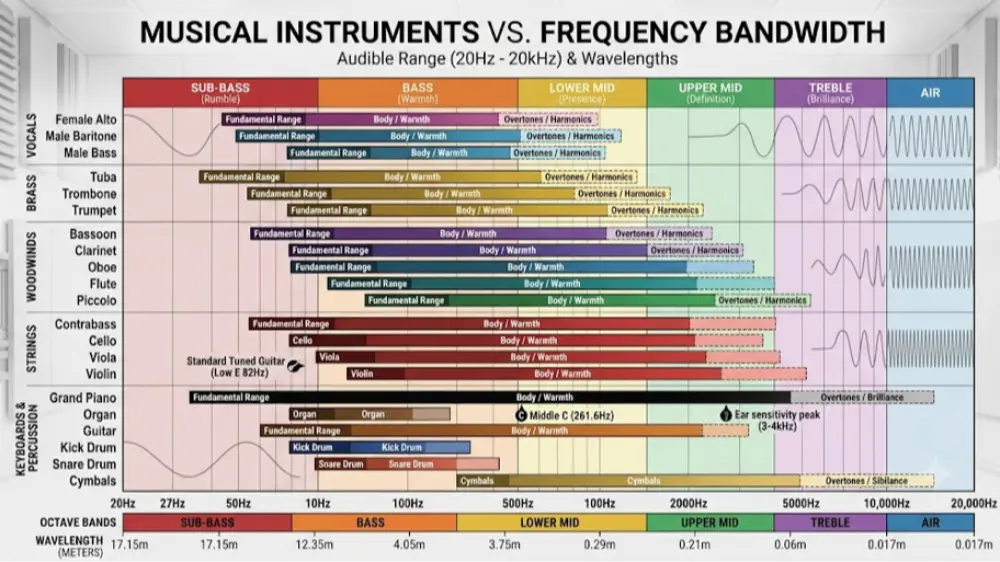
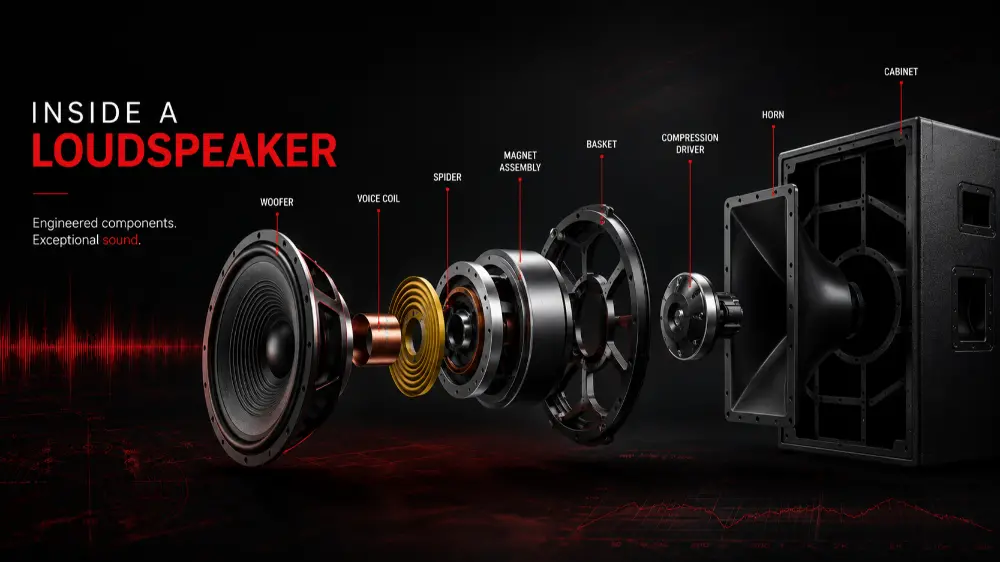
The final operational challenge lies in low-frequency management and long-term equipment integrity. Subwoofers generate omnidirectional energy that excites building structures, often resulting in neighbour disturbance and regulatory intervention. Cardioid subwoofer arrays — increasingly specified in advanced nightclub bass management systems — use phase manipulation to steer Low-frequency energy toward the dance floor while reducing transmission into surrounding structures, offering a practical solution to both acoustic containment and regulatory compliance. In parallel, system protection is essential to guard against mixer redlining — a practice that increases distortion rather than loudness, accelerates voice-coil fatigue, and introduces harshness that degrades listener comfort. Together, bass management and signal discipline form the final layer of risk control in a venue where physics, perception, and business performance are inseparably linked.
Frequently Asked Questions About Nightclub Sound Systems
What is a professional nightclub sound system?
A high-performance audio system designed to deliver powerful, clear and consistent sound throughout the nightclub, using professional speakers, subwoofers, amplifiers and DSP.
How do you design a sound system for a nightclub?
Consider the venue size, acoustics, audience capacity, coverage, SPL requirements, speaker placement, subwoofers and DSP. CSC Audio systems can be configured according to the venue's specific requirements.
What speakers are best for nightclubs?
High-output professional speakers with clear sound, strong power handling and controlled coverage are ideal. CSC Audio's Cello Series can be considered for applications requiring powerful, detailed and scalable sound.
Are line arrays suitable for nightclubs?
Yes. Line arrays can provide controlled coverage and high output, particularly in larger clubs. CSC Audio's Cello Series line-array solutions are designed for scalable professional audio applications.
How many speakers does a nightclub need?
It depends on the venue size, layout, speaker coverage and required SPL. Proper speaker distribution is more important than simply increasing the number of speakers.
How should speakers be positioned in a nightclub?
Speakers should be strategically positioned to achieve even coverage, minimise dead zones and avoid excessive sound levels in specific areas.
Why do nightclubs need subwoofers?
Subwoofers deliver powerful low frequencies that provide the impact and energy required for club music. A properly matched CSC Audio subwoofer can complement the main loudspeaker system.
What is a cardioid subwoofer system?
A cardioid subwoofer configuration controls the direction of low-frequency energy, focusing bass toward the audience while reducing unwanted rearward radiation.
How can a nightclub reduce bass sound leakage?
Proper subwoofer placement, cardioid configurations, DSP tuning and acoustic isolation can help reduce unwanted low-frequency transmission.
What role does DSP play in nightclub audio?
DSP provides control over EQ, crossover, delay, limiting and system protection, helping optimise CSC Audio loudspeakers for the venue.
How can acoustic treatment improve nightclub sound?
Acoustic treatment controls unwanted reflections and reverberation, improving clarity, definition and the overall listening experience.
How much SPL does a nightclub sound system need?
The required SPL depends on the venue, music style and local regulations. The system should provide sufficient headroom to deliver high output without distortion or excessive system strain.